Behind the Studio
A Day in the Studio: Anatomy of a Clean
Removing a century of varnish is measured in millimetres and hours. We trace a single morning's work across one small corner of one old painting.
Minute read
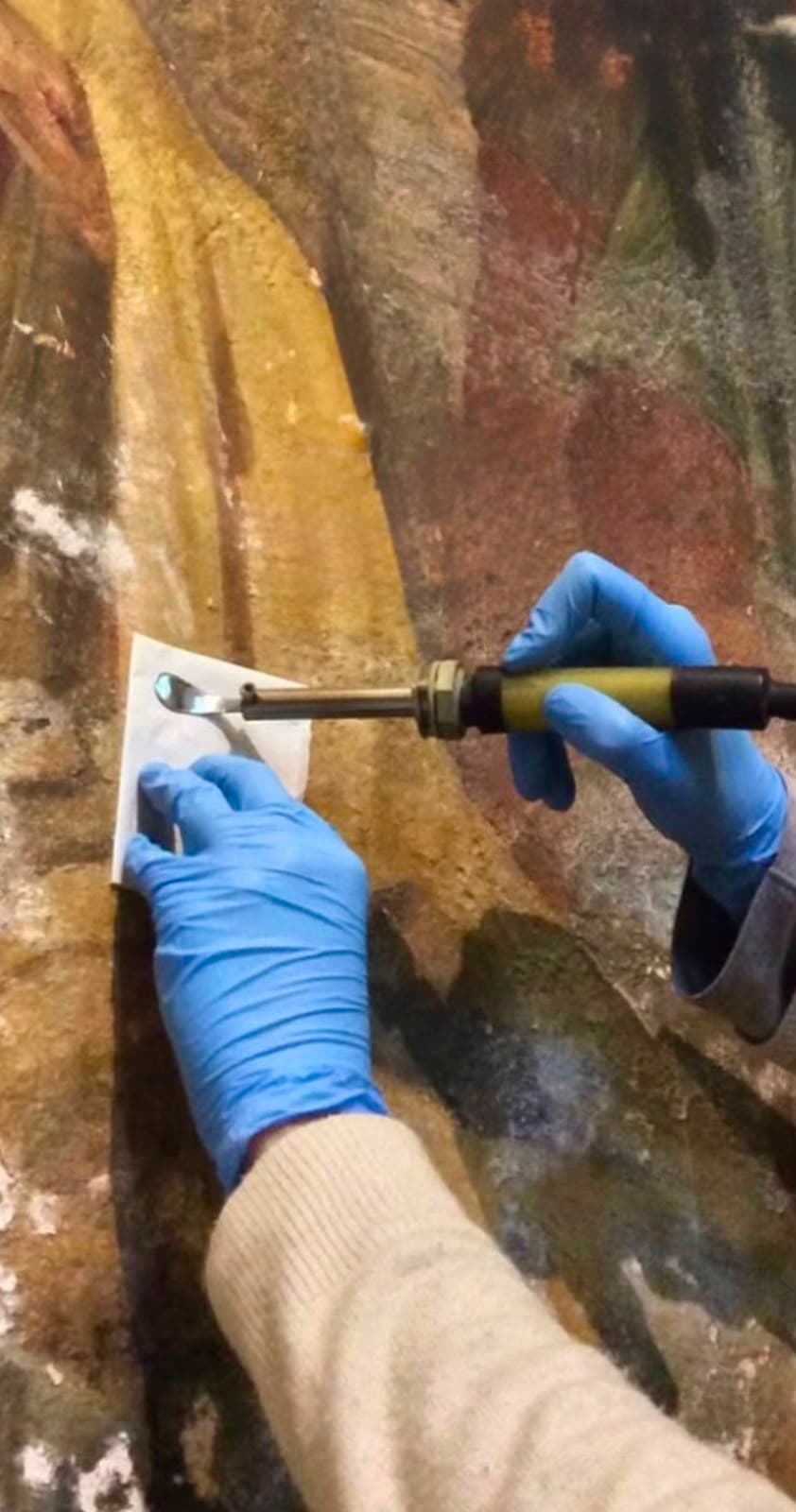
From across the room, nothing seems to happen in a conservation studio. A figure leans over a painting under a bright lamp, a swab in hand, and moves very little. Come closer, though, and you find an activity as exacting as surgery — measured in millimetres of surface and quarter-hours of patience.
Testing before touching
No solvent meets the painting until it has been tested in a discreet corner — often beneath the rebate of the frame, where the eye never travels. We build up a picture of what dissolves the varnish without disturbing the paint, timing each test to the second. Only then does the real work begin.
Square by square
Cleaning proceeds in tiny squares, the swab rolled — never rubbed — and changed the moment it discolours. A single square inch can take twenty minutes. As the oxidised varnish lifts, colour returns in real time: a passage of cool grey emerges from beneath the brown, and the painter's hand, hidden for a century, is suddenly present in the room.
By lunchtime, a corner the size of a postcard has been recovered. It is slow, and it is meant to be. The restraint that makes the work take so long is exactly the restraint that keeps it safe.
Written by Smriti Rajput, Art Revive Studio.
All journal entries
Begin
Let's discuss your work.
Share a few photographs and a conservator will respond personally within two business days — complimentary, confidential, and without obligation.